Wednesday, 31 July 2013

Zombies - Fast Vs. Slow

Good day Zombiology Students and thanks for stopping by the ZomBlog.

The release of the Zombie epic ‘World War Z’ has reignited the debate on whether the undead would move with the shambling strength of a Glaswegian on a Friday night, or strafe the apocalyptic landscape like a decomposing Usain Bolt.

It's still preferable to a budget airline
In today’s ZomBlog I’m not going to explore the issue from the ‘what makes a good film’ perspective, but rather examine what science can contribute to the debate.

Let’s begin by exploring how a disease, like Zombieism, could create the staggering, slow moving monster we encounter in so many undead incarnations.

There are two main areas of the human brain that control movement and coordination. These are the cerebellum and basal ganglia.

The cerebellum essentially tunes and refines our movements. Imagine you are learning to balance on a board placed on a ball. You'll likely tip forward or backward, and have to lean to adjust your body to correct your balance. As you perform and repeat this action your cerebellum is learning, and with enough practice you will be able to get your balance quickly.

This elephant's cerebellum has mad skillz
If this area is affected by a disorder you will have a wider stance as you attempt to balance. When you try to walk you could easily fall and when trying to perform an action, such as touching your nose with your finger, you will often miss.
The basal ganglia are responsible for selecting a particular movement, or a series of movements. When you decide to give someone a 'high five' the basal ganglia prevent you from wiggling your leg at the same time you raise your hand.
If the basal ganglia are damaged you may become slow to begin making movement. For example if I throw a ball to you, it will have bounced off your face before you even begin raising your hand and once the movement has started you will be slow in carrying it out.

You know when you've be basal ganglia-ed
Therefore we can conclude that if the Zombieism disease is damaging or impairing the aforementioned areas of the the brain it will produce in humans an unsteady and slow Zombie-like walk.  

How then could a disease evoke the opposite effect, giving us unrelenting, fast moving Zombies?

When we face a dangerous situation, inside our brain, the hypothalamus activates, sending a chemical signal to the adrenal glands which are next to your kidneys. These glands produce adrenalin, which is to the human body what spinach is to Popeye. Fuelled by adrenalin our blood flows more easily to our muscles, bringing more oxygen with it, ultimately letting them work at heightened levels. This gives us the ability to perform actions, like running fast, slightly better than we normally would. Rather than gaining a new ability, it simply expands on what we already have. But these fits of speed are short lived as within a few minutes the body begins to return to a more normal state.

But what if we continued in this state, would that give us the unrelenting abilities of the fast Zombie? Not for long, as we’d enter a state of exhaustion, damaging our immune systems and increasing our chance of having a heart attack. Simply put, the body would run out of steam.

So in reality would a disease that causes Zombieism be more likely to give us a fast or slow Zombie? The answer, for now, has to be - slow.

My personal thoughts on the debate summed up by a meme
Disease itself means, ‘a disordered or incorrectly functioning organ, part, structure, or system of the body’. A disease makes us worse than we are normally, it doesn’t improve us. I for one am particularly bad at running so it is unlikely that contracting a massively debilitating disease like Zombieism would suddenly give me Olympic level speed. Although if Usain Bolt contracted Zombieism I would be a little bit worried.

First I break a world record - then I eat your face
Of course, we’re dealing with Zombies from the perspective of science. In the fictional worlds of Zombie films, TV shows, games and books it may well be something ‘supernatural’  that gives them these amazing abilities. Couple that with the wonderful ways diseases are changing in our world and perhaps one day science will give us those terrifying fast moving ghouls.

If you have a question about the undead please get in touch with me in the comments section below, and don’t forget to visit our Book of Faces (www.facebook.com/zombiescience). I’m ready, waiting, and willing to answer your questions right here on the ZomBlog.

Take care out there,

Doctor Austin

Doctor Austin ZITS BSz MSz DPep, is a Theoretical Zombiologist and Head of the Zombie Institute for Theoretical Studies at the University of Glasgow, Scotland UK.

Wednesday, 24 July 2013

Walking Corpse Syndrome

Hello Zombiology Students and a warm welcome to the ZomBlog.

Today we're looking at Walking Corpse Syndrome, also known as Cotard's Syndrome. This rare mental condition causes people to believe they are dead, putrefying and missing internal organs - essentially Zombieism of the mind.

You have a medical licence right?

Cotard's Syndrome takes its name from French Neurologist Jules Cotard who encountered a patient named, Mademoiselle X (perhaps a relation of Professor X). Mademoiselle X claimed to have no brain, no nerves, no chest, no stomach, and no intestines. She also believed she was immortal and therefore didn't need to eat. She died of starvation.

"I ain't related to no French Bird Bro. They don't even have a word for entrepreneur."

The condition is usually found in patients suffering from depression and schizophrenia - leading many Doctors to see it as a component of these illnesses.

More recently a patient, known only as Graham, was identified with the syndrome. Graham believed his brain had died. Neurologists Adam Zeman at the University of Exeter, UK, and Steven Laureys at the University of Liège in Belgium, met with Graham and took scans of his brain. The type of scan they carried out is called positron emission tomography (PET) and is used to produce detailed, three-dimensional images of the inside of the body. Before being scanned the patient has a radioactive substance passed into their body. The substance gives off gamma waves (a type of radiation) that can be detected by the scanner. The scans taken of Graham were the first ever conducted on someone with Cotard's Syndrome.

A PET Scan. Or maybe this is a CAT Scan. I get them confused.

What they discovered was amazing. The activity in certain areas of his brain was so low it was comparable to someone in a vegetative state.

Laureys explained,

I've been analysing PET scans for 15 years and I've never seen anyone who was on his feet, who was interacting with people, with such an abnormal scan result. Graham's brain function resembles that of someone during anaesthesia or sleep. Seeing this pattern in someone who is awake is quite unique to my knowledge.

Adam Zeman continued, "It seems plausible that the reduced metabolism was giving him this altered experience of the world, and affecting his ability to reason about it."

The condition caused Graham to completely withdraw into himself. He found no pleasure in anything, he stopped eating, speaking and even brushing his teeth. This caused his teeth to turn black, further compounding his feelings that he was dead.

After lengthy psychotherapy and drug treatment Graham gradually recovered. There have been reports that using antidepressants, antipsychotics and mood stabilizers combined with traditional talking therapies have helped those who suffer from the illness.

With being such a rare condition, research into this mysterious syndrome is very limited. Could it be that when Zombies do appear the disease affecting them will induce such a syndrome? Only time will tell.

Keep up your studies and join me again next time for more science behind the undead here on the ZomBlog.

Best wishes,

Doctor Austin

Doctor Austin ZITS BSz MSz DPep, is a Theoretical Zombiologist and Head of the Zombie Institute for Theoretical Studies at the University of Glasgow, Scotland UK.

Left: Doctor Austin Right: HRH The Queen

Monday, 4 February 2013

Are Zombies Real?

A warm welcome to all of you fine Zombiology Students.

As I travel the UK delivering our new tutorial Zombie Science: Worst Case Scenario I find myself regularly being asked one question in particular, ‘are Zombies real?’

Whilst this question may seem to evoke a simple yes or no answer, it is actually a little more complicated than that.


I hope it's a yes, otherwise I'll be looking pretty stupid right now...
Certainly the Zombies (dead human bodies reanimated with an unending desire to consume flesh and the ability to transform those they bite) that populate the world of television, films, comics and games do not presently exist in the real world.

However that doesn’t preclude them from ever existing. There are many agents capable of causing disease including viruses, bacteria, parasites and rogue prions. Whilst none of these produce all the symptoms found in a fictional Zombie it is important to remember that these agents are always changing.

Think for a moment of the flu. We’ve all had it at least once, but it’s far more likely you’ve had it several times. It is caused by the influenza virus, and like Lady Gaga it’s always changing. As with all living things the virus makes small mistakes, called mutations, each time it reproduces. In every generation there are slight differences and overtime these differences build up. The fancy term for this process in ‘antigenic drift’ and this is why scientists have to continually update and change flu vaccines, to try and keep up with changes in the virus.


From this example we can see how a virus can change. Who is to say that at some point in the future a virus might change enough to produce an illness that matches the fictional version of Zombieism?

Now remember, I said this wasn’t a simple question.

Zombies are real and do exist, there’s even a law banning them from being created – although they’re not like those you’ve seen on the silver screen.

Don’t believe me? Then let’s travel to the Caribbean country of Haiti, as ethnobotanist Wade Davis did over 25 years ago. Here we find a deeply spiritual culture with a deep belief in the existence of Zombies – albeit far from the Zombies of Romero or Kirkman.

Let’s say you’re Haitian and you’ve got a family dispute. Perhaps your brother borrowed your wife, or your Gran keeps asking you to explain the internet – how do you resolve it? Simple, get the local sorcerer to turn them into a Zombie slave – problem solved!
To the Bingo? Eh, yeah, of course we are Gran.
That’s precisely what is believed to have occurred there as Wade Davis discovered. Through meetings with these sorcerers (known as Bokors) Davis managed to acquire samples of their Zombie powder. Analysis revealed the presence of a range of substances including one in particular; Tetrodotoxin. Found in species of puffer fish this toxin is one of the deadliest poisons known to humanity. However if administered in small doses it doesn’t cause death but rather gives one the appearance of being dead via paralysis, the slowing down of body functions, and the like.


Now which one is the Zombie Powder and which one is the Paprika?
The Bokor would place the Zombie powder in an unsuspecting victim’s shoes, down their back or generally anywhere where it would come in contact with the skin, nose, and throat. The victim would appear to progress toward death, eventually fooling people that they were indeed dead, and be buried.   

The Bokor and his minions would then exhume the victim and feed them another concoction designed to keep them somewhat ‘out of it’, so that they wouldn’t attempt to escape or talk back. Many claim these Zombies were then put to work as slaves, but how useful they’d be in performing even a basic task is debateable.   
As I mentioned earlier, creating a Zombie in Haiti is illegal, as article 246 of the Haitian penal code states:


It shall also be qualified as attempted murder the employment which may be made against any person of substances which, without causing actual death, produce a lethargic coma more or less prolonged. If, after the person had been buried, the act shall be considered murder no matter what result follows.

So as we have seen, ‘are Zombies real?’ is a hard question to answer, but I’ll try and make it as simple as possible. The answer is yes, and no.

If you want to know anything about the real science behind Zombies, do send your questions in to info@zombiescience.co.uk or post them in our Book of Faces (www.facebook.com/zombiescience).

Just remember to stay on good terms with your family if you ever find yourself in Haiti,

Doctor Austin

Doctor Austin ZITS BSz MSz DPep, is a Theoretical Zombiologist and Head of the Zombie Institute for Theoretical Studies at the University of Glasgow, Scotland UK.

See the Zombie Science: Worst Case Scenario tutorial –

Brighton Science Festival 2013:
Date: Sunday 10th February 2013
Times: 5.30pm & 7.30pm
Venue: Sallis Benney Theatre, 58-67 Grand Parade, Brighton, BN2 0JY
Tickets: Visit Brighton Science Festival’s Official Website 


Glasgow International Comedy Festival
Date: Monday 18th March 2013
Time: 7.30pm
Venue: The Stand Comedy Club, Woodlands Road, Glasgow, Scotland
Tickets: Visit the festival’s official website

Monday, 26 November 2012

The Walking Bred?

Good day to all you fine Zombiology Students,

I’m sure many of you are fans of the Walking Dead¸ whether in the medium of a comic book, novel, computer game or TV series – it’s truly impossible to avoid… and why would you want to? In any form it’s become one of my favourite Zombie worlds since George Romero gave birth to the modern version.

Who wants ice cream? Daddy's buying ice cream!
Being a scientist I’m interested in what Zombieism would be like in real life, and what elements we see in fiction would actually work in reality. The Walking Dead has thrown up a few brain teasing questions that I’m keen to answer. So in today’s ZomBlog I’m going to investigate their version of Zombieism, specifically trying to figure out these two puzzles…

How is the disease being transmitted?
And.
Whether their claim that everyone has the disease, but not everyone has shown symptoms, is really possible?

Why won't you just love me?
Whether intentional or not, Walking Dead makes the clever decision of not explicitly telling us what is causing the disease, making it more fun to theorise on.

"Internally, we don't know where the zombie outbreak started, how to cure it, anything like that," – Glen Mazzara, Show Runner, Walking Dead (TV Series)

“...the rule is: WHATEVER it is that causes the zombies, is something everyone already has. If you stub your toe, get an infection and die ... you turn into a zombie." – Robert Kirkman, Creator, Walking Dead

In the TV series even a CDC disease specialist whose been studying the outbreak for months hasn’t been able to figure out the causative agent.

“It could be microbial, viral, parasitic, fungal…”                                                                                                                     – Dr. Edwin Jenner, Walking Dead, Season 1 Episode 6

Animal, vegetable, mineral ... wait ... what was the question? 
From observation we can make some assumptions about its transmission:

The disease seems to spread through saliva. People contract it after being bitten by infected people. This is much like Rabies. A Rabies infected animal has the virus in its nerves and saliva, and can transmit it to a human through biting. In rarer cases, the animal can spread the virus when its saliva comes in contact with a person's mucous membranes (moist skin surfaces, like the mouth or inner eyelids), or broken skin such as a cut, scratch, bruise or open wound.

In Walking Dead, no one appears to have been infected from indirect contact. For example, the survivors must spend a massive amount of time off camera cleaning up the biological debris left by each action scene. This would inevitably include a few litres of Walker drool. Yet never has a character turned after embarking upon a heavy session of mopping, when perhaps, in the rarest of cases they should. (Exciting idea for Season 4? No expensive make-up or effects, just a mop and 250ml of dirty drool!?!)

Rabies has never been found in blood, perhaps it’s the same with the Walking Dead Zombie disease. This would explain why, despite the characters flip-flopping between being careful to avoid contact with Zombie blood and getting splashed on like a kid at Sea World, they don’t get the illness. 

I told you, this episode we stay clean of Walker bits, next season we'll be like kids in a fountain. Visualise the fountain with me Rick. Visualise. 
Alongside the saliva based transmission we also get a shocking revelation from the only bona fide medical expert we meet in the TV series, shortly before killing himself, when he utters the terrifying line, “every survivor is infected.”

How can everyone be infected but not turn?

An interesting comparison is latent tuberculosis infection. Tuberculosis is caused by bacteria called Mycobacterium tuberculosis. Some people who are infected by it do not develop the active illness. It simply remains inactive and stays that way in the majority of cases – this is known as latent tuberculosis infection. For a small percentage of people it can eventually become active for a variety of reasons; if their immune system is damaged or compromised, if they become malnourished, or simply when they become older. So our Walking Dead characters may have latent Zombieism infection. A major biological event, such as a severe trauma, or being near death, may be what is activating it.

We've really got to stop letting the Daleks make these posters...
We’ve managed to answer both of our questions today. How is the Walking Dead Zombie disease being spread? It could be like Rabies, in the saliva of the infected Walkers. This would explain why getting covered in blood and guts doesn’t turn anyone. But realistically the characters should be equally afraid of being licked by a Walker as being bitten by one.

Finally, we discovered that it is possible for us humans to be infected by a disease that lies inactive, waiting for certain conditions to get it going. A terrifying thought, I’ll not sleep tonight! 

I do hope you enjoyed this entry, and if any of you out there want to know anything about the real science behind Zombies, do send your questions to info@zombiescience.co.uk, post them in our Book of Faces (www.facebook.com/zombiescience) or get in touch on our website www.zombiescience.co.uk.


Stay Frosty,

Doctor Austin

Doctor Austin ZITS BSz MSz DPep, is a Theoretical Zombiologist and Head of the Zombie Institute for Theoretical Studies at the University of Glasgow, Scotland UK. 


Friday, 9 November 2012

Zombies versus Vampires

Welcome back Zombiology Students,

It’s a busy time here at the Zombie Institute. We’ve just finished developing a brand new tutorial Worst Case Scenario that premiered at the London Horror Festival during Halloween. Right now our team are organising a UK tour so do keep your eyes peeled for that. This has meant I’ve had less time to write articles for the ZomBlog, but I’m making up for it now by finally completing this Zombies versus Vampires blog to which many of you contributed your thoughts.  


As you’re no doubt aware this year saw countless news stories appearing relating to cannibalistic attacks. These stories have inspired the term ‘Zombie Summer’ and are almost always cited as being indicative of Zombies, leading many to believe that a Zombie outbreak is in progress, or at the very least, building up steam. In a previous blog I discussed this, and to reiterate, they are not Zombie-like at all. However, whilst talking with my friends at the Zombie Shop, they made an interesting point, “...was there an influx of 'real' vampire attacks after the release of 'Interview with a [sic] Vampire'?”

Before we start, can I get you a drink? No. Wait. I meant something to eat. Damn it! It's the Murdoch interview all over again!
Has the prevalence of the Zombie genre (e.g. The Walking Dead, Zombie events, walks, etc) caused reporters to become obsessed, and see Zombies everywhere? If so, why hasn’t the Twilight series created a similar pattern for Vampires? Or as Zombie Shop point out, did Anne Rice’s Interview with the Vampire evoke such a response when it was published, or again when adapted as film?

It’s important to state here that I am not examining ‘real’ Vampire stories, those that pertain to describe the exploits of a mythical being who feeds on blood. I for one am not an expert in Vampirology. I am merely looking for news stories that attribute unusual assaults/murders to Vampires, or set these stories in that context.

Interview with the Vampire was published in 1976, and the later film adaption in 1994. During my research I couldn’t locate many reports of Vampire-like attacks following either of these periods.

This may be due to the lack of Internet, it was a simpler time, where not every news story was posted online and kept available until the end of the universe. However, in 1998, 22 year old Joshua Rudiger ran around the streets of San Francisco slashing homeless victim’s throats and drinking their blood. He claimed to be a 2,000 year old Vampire, and a Samurai.  

There are a wide range of such stories available in the 21st century, amazingly some very recent stories are far more extreme than that of the Miami Cannibal. Yet we haven’t seemed to have heard of them.

Take the case in Florida of Josephine Smith, a 22 year old woman. In September 2011 she viciously attacked an elderly homeless man, biting chunks of flesh from his face, lips, and arms. Her final words before beginning the assault were, “I am a vampire, I am going to eat you.” When arrested Smith claimed to have no recollection of the attack. This story is very similar to the recent Miami Cannibal case. The victim in both instances was a homeless person, both involved biting, and both attackers carried out the attack naked. Yet this story apparently failed to capture the public’s eye. Smith wasn’t even deemed worthy of her own nickname as the ‘Florida Vampire’ or even ‘Bitey Lady’.

And this is by no means the only one;

May, 2006: A 15 year old girl attacked three classmates in New York, slashing their throats, biting them, and attempting to drink their blood. The ‘vampire’ was charged with second degree assault as a minor and released. Read in full: http://www.metro.co.uk/weird/12547-vampire-girl-attacks-classmates

December, 2010: A 20 year old in Alabama attempted to burn a ‘V’ into a teenager’s forehead, the arresting Detective described him as, “a want-to-be vampire”. Read in full: 

August, 2011: An 18 year old man appeared in court accused of, amongst other things, cutting young woman, biting them, and telling them he was a vampire. Read in full:

August, 2011: A 19 year old Texas man, who claimed to be a 500 year old vampire (from Hell), broke into a woman’s apartment and bit her, then fled shouting that he, “didn’t want to have to feed on humans”. Read in full:

June, 2012: A San Diego man with ‘vampire teeth’ was arrested for attacking a 55 year old homeless man. Read in full:

I'm often mistaken for R-Patz
June, 2012: In Denver a woman was arrested after attacking two people in a convenience store, groping and biting one man, then biting the female cashier. Read in full:

A notable difference between these stories and their Zombie counterparts is tone. When reading the Vampire stories it’s obvious that they don’t paint the ‘Vampire’ as being real, but rather as an (often) disturbed person. Yet many of the Zombie articles cite the incidents as being clear proof that a Zombie is real and that a ‘Zombie Apocalypse’ is beginning.       

A fellow Zombie researcher, Louise, had an interesting perspective:

Eating human flesh, particularly the face, in public places is a bit more terrifying than draining blood in public. Plus, those acting like 'zombies' seem unconscious of what they're doing, whereas the 'vampires' are probably very conscious of their actions ... which, to me, make it a little more scary.

Another student of mine, Mike, had this to say:

The main issue is the background of each of the two types of story, vampiric behaviour has always been seen as erotic, personal, and this is why people are attracted to the whole vampire thing due to books and movies. The vampire has lost its ‘darkness’ and is more acceptable now as such the media likes is shock value and that's why the ‘zombie’ stories still loom large in the media. There is nothing sexy about eating someone’s face.

However, fans of the film Zombie Strippers may disagree with the last sentence.  

Ultimately I haven’t determined a single reason as to why assault stories framed as ‘Zombie Attacks’ are more prominent and have a tendency to go wildly viral compared to those described as ‘Vampire Attacks’. But I do like the following idea from one of my top students, Flora, on how we can make the Zombie a more attractive story in the press:

Zombies lack the glamorous image the press likes to promote, but do get the 'shock, horror, yuk' response. Redress the balance by getting Gok to do a zombie make-over, thus making them appear more on-trend and ask Alistair Campbell to do some negative spin about the more gruesome vampire activity, showing them in their worst possible light in a Sunday newspaper expose. Suddenly zombies will be the ones to get the positive headlines and vampires will be so last year they won't get a mention, except in a short disparaging paragraph on page 10.

I'll leave you with this brain tickler from the enigmatic Philosoraptor...


If any of you out there want to know anything about the real science behind zombies, do send your questions to info@zombiescience.co.uk or post them in our Book of Faces (www.facebook.com/zombiescience).

The truth may well be out there,

Doctor Austin

Doctor Austin ZITS BSz MSz DPep, is a Theoretical Zombiologist and Head of the Zombie Institute for Theoretical Studies at the University of Glasgow, Scotland UK.  

Monday, 9 July 2012

Zombie Cities

Welcome back Zombiologists,

I’m continuing to enjoy my summer break and having a lovely rest from Bunsen burners and overly emotional Janitors (sorry Davey). So with science firmly on the back Bunsen burner, today I’ll be reviewing the new Zombie graphic novel from Silver Fox Comics & Sorab Del Rio, Zombie Cities.   
Zombie Cities is a compilation of seven unique zombie tales set in cities across the world. It was written, directed and created by Sorab and visually brought to life by a small team of highly talented artists. The stories are excellent and regularly hilarious. For example, an Aussie Dad rescues his daughter from a Zombie horde, and then proceeds to endanger her by insisting she film him in action for the ‘You Tube’, a news reporter tries to be the first to interview a Zombie live on air, and the frequent use (or perhaps abuse) of George Clooney, all amused me greatly.

Zombie Cities makes clever use of world locations, and world figures. They have certainly taken advantage of their freedom from costly sets, and digital effects, that are obstacles for equivalent movies. Events are set against landmarks from Sydney to London, and all are very well drawn. I was most impressed with downtown London, where Big Ben stands behind a burning red bus and zombies are lumbering forward.
Many of the stories are self-contained, whilst others leave you wanting to know what happens next;

President Obama features in Yes We Can Kill Zombies struggling to come to terms with leading a Zombie infested nation. Here Mr. President is outclassed at shooting by his First Lady, a very nice touch. I won’t spoil it by revealing the end, but the title does say it all. If I Can Kill Em’ Here, I Can Kill Em’ Anywhere is a feel good story (something that in the Zombie genre is rather unique in itself) about Ronald Crump, a homeless man who makes good during the Zombie outbreak thanks to a very unusual law that’s put in place in New York City. In Horror at Harajuku we get a fascinating insight into Japanese teen culture as a group of girls head to fashion capital Harajuku for a day out. Only of course to encounter Zombies, and naturally, George Clooney.

My personal favourite has to be God Save the Queen. I must admit my bias here. As Zombiologist Royal to the Her Majesty the Queen I do have a love for all things Elizabeth II. It opens with a brilliant reference to Earl Grey Tea, one of my Top Ten Teas. I showed it to my friends at Tea Club last week and my how we all laughed. I realise the tea based reference isn’t everyone’s cup of tea, (ha!) but to tea lovers such as myself it was a nice addition. It truly is a great zombie tale. Prince’s Harry and William make a great shadowy duo as they command a ruthless Queen’s Guard. We’re left on a cliff-hanger, so here’s hoping we see more of the Queen and her Corgi’s in future editions. 
Overall Zombie Cities is an excellent series of contemporary zombie stories. It strikes a good balance between humour, emotion and horror, with enough new twists on the zombie genre to make it stand out against the horde. Zombie Fans should absolutely purchase this fine novel. My Tea Club gave it five biscuits out of five, but I didn’t think that measurement system was appropriate in this instance.

Please do visit the Zombie Cities Website and Book of Faces Site.

Remember, if any of you out there want to know anything about the real science behind zombies, do send your questions in to info@zombiescience.co.uk or post them on our Book of Faces (www.facebook.com/zombiescience). My wee break is almost up, so I’ll be back next time with a spectacularly scientific Zombie Science Blog.

Stay fresh and loose,

Doctor Austin
Doctor Austin ZITS BSz MSz DPep, is a Theoretical Zombiologist and Head of the Zombie Institute for Theoretical Studies at the University of Glasgow, Scotland UK.  

For even more Zombie Science pick up the official Zombie Science book on Amazon now

Tuesday, 3 July 2012

Remaining Days


Greetings Zombiologists,

It’s that marvellous time of year when our current students have all graduated and our new students are still to arrive. This allows me the benefit of ‘chillax-ing’ as they call it (I think) and take a break from my academic & scientific duties. So for the next two ZomBlogs’ I’ll be having a look at some of the more creative contributions to the Zombie World.  

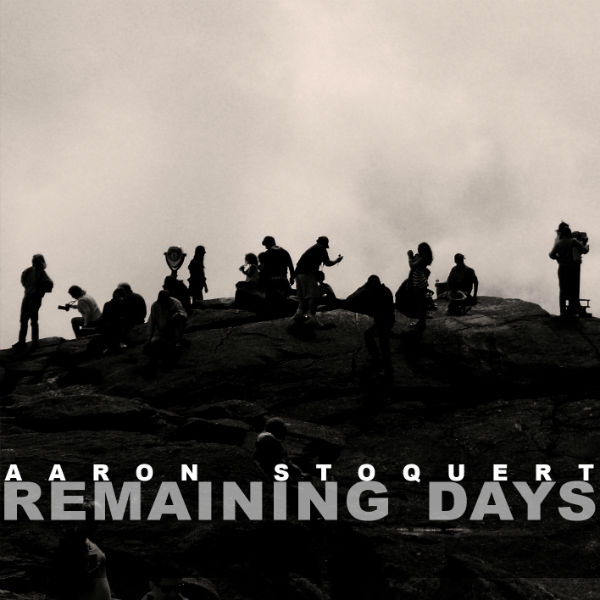
Today I’ve been listening to the wonderful new album Remaining Days, from the immensely talented Aaron Stoquert. Aaron is a New York folk artist who specialises in his own unique brand of eerie melodies. All of which are based on the undead and the emotions they might feel. It is this inimitable quality that I believe makes Aaron’s contribution to the Zombie genre truly distinctive.

This isn’t the first time I’ve had the pleasure of hearing Aaron’s work. Some time ago I discussed his EP, Run for your Life, in this very blog. And fans will be pleased to hear that Aaron’s new album doesn’t disappoint.

We open with The Guests, a haunting piano melody crackling out amongst a blanket of gritty distortion. Whilst there are no vocal lyrics, it speaks volumes, setting an emotional scene that one can visualise playing out across a Zombie apocalyptic landscape.

But this unnerving peace is quickly shattered by Flesh and Bone, an almost threatening ballad where one feels overtly intimidated by an oncoming Zombie horde, “we're coming for you, say goodbye or hope to god, that days are spared you.”

Only one track, Last Day, returns from the original EP. But it does so in splendid form, sounding bigger and fuller than its predecessor.

A particular favourite song of mine is The Front Lines, a track that is the official theme of War Against the Walking Dead, a book by Sean T. Page. Sean is well known to us here in his role as Minister for Zombies (UK), and this track truly captures his writing. From the military beat of the drums, to the enduring melody, by listening you enter the mind of someone trapped and fighting for their life against the undead.

I’ll admit that I am by no means a musical connoisseur, nor expert, but I know what I like, and Remaining Days is one album I truly love. Aaron has really stepped up from his EP, bringing a bigger, more developed, sound and range to his new work, whilst not losing the individuality that I feel makes him a unique voice.


And do join me next time when I’ll be reviewing Zombie Cities, a new graphic novel from Sorab Del Rio and Silver Fox Comics.                 

Remember, if any of you out there want to know anything about the real science behind zombies, do send your questions in to info@zombiescience.co.uk or post them on our Facebook page (www.facebook.com/zombiescience). I might be relaxing for a little bit, but I’ll be back into science mode soon.

Best wishes,

Doctor Austin
Doctor Austin ZITS BSz MSz DPep, is a Theoretical Zombiologist and Head of the Zombie Institute for Theoretical Studies at the University of Glasgow, Scotland UK.  

For even more Zombie Science pick up the official Zombie Science book on Amazon now