Showing posts with label doctor austin. Show all posts

Monday, 18 August 2014

Doctor Austin to retire

  
Doctor Austin
Head of the Zombie Institute for Theoretical Studies
1996 - 2014

To all my students,

The time has come for me to retire as Head of the Zombie Institute for Theoretical Studies. I want to thank each and every one of you for giving me the honour of teaching you about a subject I care so very passionately about. I have been so fortunate to have such a brilliant career, it has been wonderful. I know that all of you will carry on the study of Zombies and Zombieism, and take it to places I could only dream of. There are further details of my retirement in the official press release below.

I know the Institute is in safe hands, and will continue to deliver you all an excellent dose of Zombie Science.

Stay safe out there,

Doctor Austin

PRESS RELEASE

Issued: 18/08/2014

For Immediate Release

WORLD-RENOWNED THEORETICAL ZOMBIOLOGIST DOCTOR AUSTIN RETIRES

World-renowned Theoretical Zombiologist Doctor Austin is to retire from his post as Head of the Zombie Institute for Theoretical Studies, at the University of Glasgow, on Monday the 25th of August 2014. Appointed in 1996, Doctor Austin has been responsible for the development of the Prion Zombieism Theorem as well as the Institute’s public engagement programme. The latter took the form of the spoof lectures and tutorials, Zombie Science 1Z, Worst Case Scenario and Brain of the Dead. Supported by the charity Wellcome Trust, these events have been seen by over 40,000 people since their inception in 2010. Two of these shows are currently taking place at the Edinburgh Fringe Festival. 
 
Doctor Austin has worked extensively on the subject of Zombiology, spending time researching Kuru in Papua New Guinea during the 1960s and studying variant Creutzfeldt-Jakob disease in the 1990s. As Head of the Institute he has taken awareness of Zombieism to an all time high. Of his decision to retire, Doctor Austin has said, ‘I have enjoyed every moment of my time at the Zombie Institute and have been humbled to work alongside a lot of truly wonderful people. I am particularly proud of the public engagement programme through which I met so many interesting and varied individuals. I’ve always believed that science isn’t for a select few, it’s for everyone, and that’s what drove me during my years touring the world.’

The University of Glasgow have yet to announce a successor for the Institute, which first opened on campus in 1803. Doctor Austin has stated that he will remain on as Zombiologist Royal to Her Majesty the Queen, until such time as an appropriate replacement is selected.

Doctor Austin will present his final public lectures at the Edinburgh Fringe, every night until the 25th of August. The sixty minute shows’, Zombie Science: Brain of the Dead and Worst Case Scenario adopt Doctor Austin's unique combination of comedy and science. Worst Case Scenario sees the audience make decisions on dealing with a Zombie outbreak. The choices they make alter the outcome - meaning no two shows are ever the same. Brain of the Dead allows the audience to experience life as a Zombie.

Asked about this, and his future plans, the Doctor said, ‘the Fringe is a brilliant way to end my career, it’s a fascinating place, full of terrifically talented people. I have spent my whole life exploring strange environments, and this is no exception. But after a long time on the move I look forward to spending my retirement with my family and allowing the next generation to push the study of Zombiology to exciting new levels.’

Notes to Editors

About Doctor Austin;

Doctor Austin is a Theoretical Zombiologist at the University of Glasgow and has been Head of the Zombie Institute for Theoretical Studies since 1996. His theories on Zombieism have been published worldwide in publications as diverse as The Times, The Guardian (Las Vegas), The Daily Mail, Playboy (Russia), The Zombie Times and The Metro. Doctor Austin has appeared on the BBC, Sirius XM (USA), RTE Television (Ireland) and is the author of Zombie Science 1Z, a guidebook to the science of the undead, first published in 2010.  

Lecture Details;

Zombie Science: Brain of the Dead – Edinburgh Fringe 2014
18th - 25th August at 7.10pm (1hr)
Tickets: £6.50 - £10.50
C Venues, Adam House, Chambers Street, EH1 1HR
Fringe Venue 34
C Venue Box Office: 0845 260 123 / www.cthefestival.com
Fringe Box Office: 0131 226 0026 / www.edfringe.com

Zombie Science: Worst Case Scenario – Edinburgh Fringe 2014
18th - 25th August at 10pm (1hr)
Tickets: £6.50 - £10.50
C Venues, Adam House, Chambers Street, EH1 1HR
Fringe Venue 34
C Venue Box Office: 0845 260 123 / www.cthefestival.com
Fringe Box Office: 0131 226 0026 / www.edfringe.com

Web Links;

@ZombieScience1Z
  
##Ends##

Doctor Austin with Her Majesty the Queen


Tuesday, 1 July 2014

Book Review: Each New Morn

Good day Zombiology students,

Thank you for stopping by the ZomBlog. Today I’ll be taking a break from science to review Each New Morn a post-apocalyptic thriller from L. G. Thomson. My usual caveat applies, I am a scientist, not a critic, therefore I can only share my personal thoughts of the book. I must also declare a conflict of interest, as I make a special appearance in the story! In fact the book holds a special place in my heart as the author found inspiration from some of our science in the creation of her Zombies - a most humbling honour.


Each New Morn follows survivors of a deadly prion disease named Falling Down Flu. I can hear scientists grinding their teeth, as influenza refers to a virus not a prion, but settle down, this is explained in the book. This isn’t your traditional Zombie story, in fact the word Zombie is rarely used and the disease has many unique factors that set it apart from the standard Romero model. The outbreak begins with patients falling into a sleeping state for a short period. Some wake up fine, some never wake again and others, well, they come back different.

The story begins with Chrissie, a woman alone in her home, where other members of her family haven’t woken up. Anarchy has overwhelmed the streets and she makes the decision to take a car and seek safer pastures. As is often the case, Chrissie discovers that the most dangerous element of the apocalypse is not the infected but other humans.


In the second part we are introduced to Shaw, a man who was trapped on a visit to his home village and like Chrissie, his family doesn’t awaken with him. He does have a lovely dog, Toby, for company. It is here that we have our first encounter with a ‘Zombie’. This doesn’t happen until more than 80 pages in, very unusual for a Zombie tale, however I found the story so gripping, that I hadn’t even noticed. After dispatching the first of many undead monsters, Shaw begins to assemble survivors and they struggle to survive against the conditions of the remote Highland area.

I’m cautious not to reveal too many of the exciting twists and turns in the book, spoilers I believe they are called. But I must discuss the Zombies because I really loved (and was terrified) by them. Those who awaken changed behave in some of ways we expect of a Zombie. They are aggressive, relentless and difficult to kill. In a break from the norm they do not moan – they scream. Nicknamed Screamers they roam the night wailing horribly. This is a nice nod to the banshee, a fixture of Scottish Gaelic mythology. These creatures are also vulnerable to injury in a more human way, meaning it’s not just a headshot that’ll take them down. I liked that because from a scientific perspective the lack of explanation as to how the body functions without blood flowing, or consumed food & drink being transferred to energy, is a bit confusing.

Overall the story is action packed – it covers a long journey and a long period of time. It explores areas many other Zombie stories overlook, such as the rise of feral animals, an explosion in the insect population and the realistic decay of the things we humans leave behind. The approach is different from other Zombies stories, making it a fresh and surprising read – and as an avid fan of all things Zombie this doesn’t happen to me often. It is set in Scotland, and being my home country, I liked that a lot. There’s something exciting about being able to visualize these events happening in your immediate world. My only slight confusion was why American terms were used, such as ‘gas’ and ‘store’, as the characters were not American. Perhaps this helps with international sales.

If you’d like a gripping, fresh take on the Zombie genre, packed with tension and surprises that are equally pleasant and horrible then Each New Morn is for you.       


L. G. Thomson’s Each New Morn is available on Amazon and more information can be found on the official website.

I’m going to the Edinburgh Fringe 2014 with two offerings from Zombie Science, details below;

Zombie Science: Brain of the Dead – Edinburgh Fringe 2014
30th July - 25th August (not 12th) at 7.10pm (1hr)
Tickets: £6.50 - £10.50
C Venues, Adam House, Chambers Street, EH1 1HR
Fringe Venue 34
C Venue Box Office: 0845 260 123 / www.cthefestival.com
Fringe Box Office: 0131 226 0026 / www.edfringe.com

Zombie Science: Worst Case Scenario – Edinburgh Fringe 2014
30th July - 25th August (not 12th) at 10pm (1hr)
Tickets: £6.50 - £10.50
C Venues, Adam House, Chambers Street, EH1 1HR
Fringe Venue 34
C Venue Box Office: 0845 260 123 / www.cthefestival.com
Fringe Box Office: 0131 226 0026 / www.edfringe.com

Stay safe out there,

Doctor Austin   

Doctor Austin ZITS BSz MSz DPep, is a Theoretical Zombiologist and Head of the Zombie Institute for Theoretical Studies at the University of Glasgow, Scotland UK.

Wednesday, 7 August 2013

Zombies - Sick Zombies

Greetings Zombiology Students and a hearty welcome to the ZomBlog.

Today’s question came in from John, he asked ‘can Zombies get sick?’


Regular readers will know that our version of Zombies here at the Institute are based on genuine science, rather than fiction. So there are many differences between our idea of a Zombie and those you might encounter on the silver screen.

Presently it is not possible to have a dead body that acts as though it were living. Our current theories dictate that Zombies are not undead but they are human beings who are suffering from a disease. Therefore they will still have beating hearts, a need to eat, breathe and expel waste. The Zombie disease will cause them to be very aggressive, eating continually (controversially not just human flesh - but anything), walk with unsteady shambling movements, and communicate only through a deathly moan. Whatever causes this disease, be it a virus, bacterium, or prion disease, it will be a serious, horrific illness.

The cat based meme is also a strong contender. 
But as John asks, could Zombies get sick?

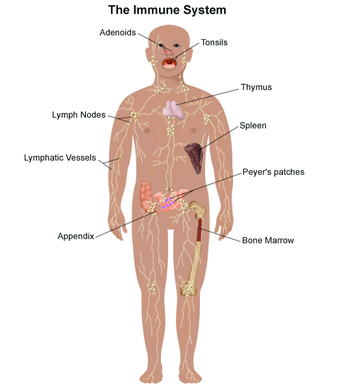
All of us have a guardian against getting ill, our immune system. The immune system is our defender from infectious invaders. Through something called an immune response, the immune system attacks organisms and substances that enter our body to try and damage our vital systems or cause disease.
The immune system, as portrayed by a terrifying drawing.
A network of cells, tissues and organs make up the immune system. The important cells are the white blood cells, also known as leukocytes. They come in two basic types; phagocytes, which, much like a Zombie, chew up invading organisms, and lymphocytes, cells that allow the body to remember and recognize previous invaders and help the body destroy them.
When foreign substances enter our body (called antigens), many cells work together to spot them, and try to get rid of them. They do this by triggering the creation of antibodies, special proteins that lock on to the invaders. Once they’ve been created, they stay in the body, ready to strike again should the disease return. This is why once you get sick with something like chicken pox it is unlikely you’ll get ill from it again.
There are diseases that can affect the immune system. One of the most well known is HIV (human immunodeficiency virus) infection / AIDS (acquired immunodeficiency syndrome). This disease gradually destroys the immune system. Without any defence the body is vulnerable to a multitude of organisms which can easily cause life threatening infections in AIDS patients.
Whatever is causing Zombieism it will be a very invasive disease and is likely to weaken the immune system. On top of this a Zombie’s diet is unlikely to be balanced. They are simply eating anything and everything they can. It is doubtful they’ll be garnishing all the required nutrients that help the body fight off germs. Poor hygiene will also play a role. After all I seriously doubt that a Zombie will take the time to wash its hands after eating or going to the bathroom (if indeed they go to a bathroom, they probably go wherever and whenever they want).
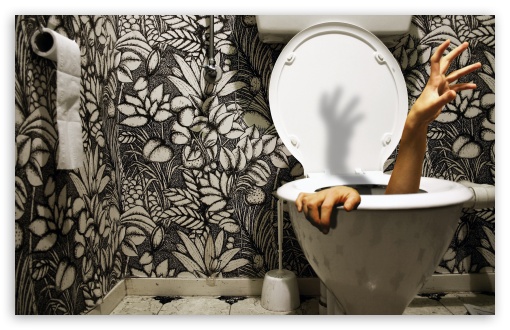
I believe they call this a 'mercy flush'.
Combining all these factors together and a Zombie is going to be an easy target for every illness out there. So the answer to John’s question, can Zombies get sick, has got to be a firm yes. Not only can they get sick, they’re at much greater risk than the rest of us. Hence biological warfare may offer a defence against the apocalypse. But here at the Zombie Institute we always recommend trying to help treat and cure Zombies, rather than trying to kill them! Always remember that Zombies are people too.
If you have a question about the undead please get in touch with me in the comments section below, and don’t forget to visit our Book of Faces (www.facebook.com/zombiescience). I’m ready, waiting, and willing to answer your questions right here on the ZomBlog.

Stay safe students,

Doctor Austin

Doctor Austin ZITS BSz MSz DPep, is a Theoretical Zombiologist and Head of the Zombie Institute for Theoretical Studies at the University of Glasgow, Scotland UK.


Monday, 4 February 2013

Are Zombies Real?

A warm welcome to all of you fine Zombiology Students.

As I travel the UK delivering our new tutorial Zombie Science: Worst Case Scenario I find myself regularly being asked one question in particular, ‘are Zombies real?’

Whilst this question may seem to evoke a simple yes or no answer, it is actually a little more complicated than that.


I hope it's a yes, otherwise I'll be looking pretty stupid right now...
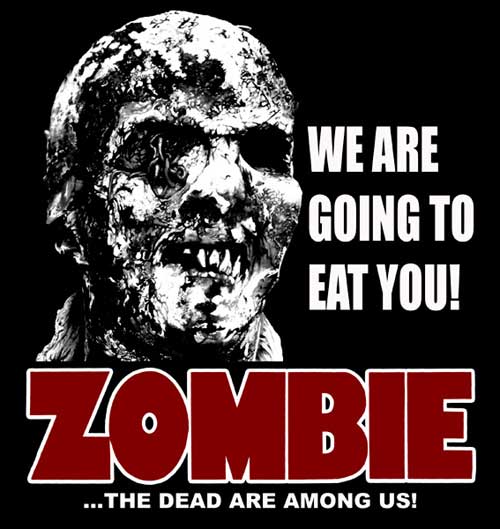
Certainly the Zombies (dead human bodies reanimated with an unending desire to consume flesh and the ability to transform those they bite) that populate the world of television, films, comics and games do not presently exist in the real world.

However that doesn’t preclude them from ever existing. There are many agents capable of causing disease including viruses, bacteria, parasites and rogue prions. Whilst none of these produce all the symptoms found in a fictional Zombie it is important to remember that these agents are always changing.

Think for a moment of the flu. We’ve all had it at least once, but it’s far more likely you’ve had it several times. It is caused by the influenza virus, and like Lady Gaga it’s always changing. As with all living things the virus makes small mistakes, called mutations, each time it reproduces. In every generation there are slight differences and overtime these differences build up. The fancy term for this process in ‘antigenic drift’ and this is why scientists have to continually update and change flu vaccines, to try and keep up with changes in the virus.


From this example we can see how a virus can change. Who is to say that at some point in the future a virus might change enough to produce an illness that matches the fictional version of Zombieism?

Now remember, I said this wasn’t a simple question.

Zombies are real and do exist, there’s even a law banning them from being created – although they’re not like those you’ve seen on the silver screen.

Don’t believe me? Then let’s travel to the Caribbean country of Haiti, as ethnobotanist Wade Davis did over 25 years ago. Here we find a deeply spiritual culture with a deep belief in the existence of Zombies – albeit far from the Zombies of Romero or Kirkman.

Let’s say you’re Haitian and you’ve got a family dispute. Perhaps your brother borrowed your wife, or your Gran keeps asking you to explain the internet – how do you resolve it? Simple, get the local sorcerer to turn them into a Zombie slave – problem solved!
To the Bingo? Eh, yeah, of course we are Gran.
That’s precisely what is believed to have occurred there as Wade Davis discovered. Through meetings with these sorcerers (known as Bokors) Davis managed to acquire samples of their Zombie powder. Analysis revealed the presence of a range of substances including one in particular; Tetrodotoxin. Found in species of puffer fish this toxin is one of the deadliest poisons known to humanity. However if administered in small doses it doesn’t cause death but rather gives one the appearance of being dead via paralysis, the slowing down of body functions, and the like.


Now which one is the Zombie Powder and which one is the Paprika?
The Bokor would place the Zombie powder in an unsuspecting victim’s shoes, down their back or generally anywhere where it would come in contact with the skin, nose, and throat. The victim would appear to progress toward death, eventually fooling people that they were indeed dead, and be buried.   

The Bokor and his minions would then exhume the victim and feed them another concoction designed to keep them somewhat ‘out of it’, so that they wouldn’t attempt to escape or talk back. Many claim these Zombies were then put to work as slaves, but how useful they’d be in performing even a basic task is debateable.   
As I mentioned earlier, creating a Zombie in Haiti is illegal, as article 246 of the Haitian penal code states:


It shall also be qualified as attempted murder the employment which may be made against any person of substances which, without causing actual death, produce a lethargic coma more or less prolonged. If, after the person had been buried, the act shall be considered murder no matter what result follows.

So as we have seen, ‘are Zombies real?’ is a hard question to answer, but I’ll try and make it as simple as possible. The answer is yes, and no.

If you want to know anything about the real science behind Zombies, do send your questions in to info@zombiescience.co.uk or post them in our Book of Faces (www.facebook.com/zombiescience).

Just remember to stay on good terms with your family if you ever find yourself in Haiti,

Doctor Austin

Doctor Austin ZITS BSz MSz DPep, is a Theoretical Zombiologist and Head of the Zombie Institute for Theoretical Studies at the University of Glasgow, Scotland UK.

See the Zombie Science: Worst Case Scenario tutorial –

Brighton Science Festival 2013:
Date: Sunday 10th February 2013
Times: 5.30pm & 7.30pm
Venue: Sallis Benney Theatre, 58-67 Grand Parade, Brighton, BN2 0JY
Tickets: Visit Brighton Science Festival’s Official Website 


Glasgow International Comedy Festival
Date: Monday 18th March 2013
Time: 7.30pm
Venue: The Stand Comedy Club, Woodlands Road, Glasgow, Scotland
Tickets: Visit the festival’s official website

Friday, 9 November 2012

Zombies versus Vampires

Welcome back Zombiology Students,

It’s a busy time here at the Zombie Institute. We’ve just finished developing a brand new tutorial Worst Case Scenario that premiered at the London Horror Festival during Halloween. Right now our team are organising a UK tour so do keep your eyes peeled for that. This has meant I’ve had less time to write articles for the ZomBlog, but I’m making up for it now by finally completing this Zombies versus Vampires blog to which many of you contributed your thoughts.  


As you’re no doubt aware this year saw countless news stories appearing relating to cannibalistic attacks. These stories have inspired the term ‘Zombie Summer’ and are almost always cited as being indicative of Zombies, leading many to believe that a Zombie outbreak is in progress, or at the very least, building up steam. In a previous blog I discussed this, and to reiterate, they are not Zombie-like at all. However, whilst talking with my friends at the Zombie Shop, they made an interesting point, “...was there an influx of 'real' vampire attacks after the release of 'Interview with a [sic] Vampire'?”

Before we start, can I get you a drink? No. Wait. I meant something to eat. Damn it! It's the Murdoch interview all over again!
Has the prevalence of the Zombie genre (e.g. The Walking Dead, Zombie events, walks, etc) caused reporters to become obsessed, and see Zombies everywhere? If so, why hasn’t the Twilight series created a similar pattern for Vampires? Or as Zombie Shop point out, did Anne Rice’s Interview with the Vampire evoke such a response when it was published, or again when adapted as film?

It’s important to state here that I am not examining ‘real’ Vampire stories, those that pertain to describe the exploits of a mythical being who feeds on blood. I for one am not an expert in Vampirology. I am merely looking for news stories that attribute unusual assaults/murders to Vampires, or set these stories in that context.

Interview with the Vampire was published in 1976, and the later film adaption in 1994. During my research I couldn’t locate many reports of Vampire-like attacks following either of these periods.

This may be due to the lack of Internet, it was a simpler time, where not every news story was posted online and kept available until the end of the universe. However, in 1998, 22 year old Joshua Rudiger ran around the streets of San Francisco slashing homeless victim’s throats and drinking their blood. He claimed to be a 2,000 year old Vampire, and a Samurai.  

There are a wide range of such stories available in the 21st century, amazingly some very recent stories are far more extreme than that of the Miami Cannibal. Yet we haven’t seemed to have heard of them.

Take the case in Florida of Josephine Smith, a 22 year old woman. In September 2011 she viciously attacked an elderly homeless man, biting chunks of flesh from his face, lips, and arms. Her final words before beginning the assault were, “I am a vampire, I am going to eat you.” When arrested Smith claimed to have no recollection of the attack. This story is very similar to the recent Miami Cannibal case. The victim in both instances was a homeless person, both involved biting, and both attackers carried out the attack naked. Yet this story apparently failed to capture the public’s eye. Smith wasn’t even deemed worthy of her own nickname as the ‘Florida Vampire’ or even ‘Bitey Lady’.

And this is by no means the only one;

May, 2006: A 15 year old girl attacked three classmates in New York, slashing their throats, biting them, and attempting to drink their blood. The ‘vampire’ was charged with second degree assault as a minor and released. Read in full: http://www.metro.co.uk/weird/12547-vampire-girl-attacks-classmates

December, 2010: A 20 year old in Alabama attempted to burn a ‘V’ into a teenager’s forehead, the arresting Detective described him as, “a want-to-be vampire”. Read in full: 

August, 2011: An 18 year old man appeared in court accused of, amongst other things, cutting young woman, biting them, and telling them he was a vampire. Read in full:

August, 2011: A 19 year old Texas man, who claimed to be a 500 year old vampire (from Hell), broke into a woman’s apartment and bit her, then fled shouting that he, “didn’t want to have to feed on humans”. Read in full:

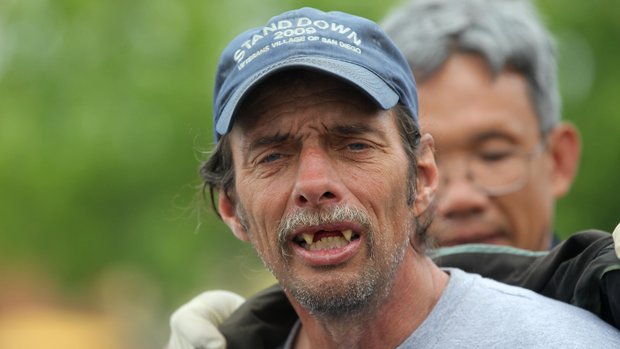
June, 2012: A San Diego man with ‘vampire teeth’ was arrested for attacking a 55 year old homeless man. Read in full:

I'm often mistaken for R-Patz
June, 2012: In Denver a woman was arrested after attacking two people in a convenience store, groping and biting one man, then biting the female cashier. Read in full:

A notable difference between these stories and their Zombie counterparts is tone. When reading the Vampire stories it’s obvious that they don’t paint the ‘Vampire’ as being real, but rather as an (often) disturbed person. Yet many of the Zombie articles cite the incidents as being clear proof that a Zombie is real and that a ‘Zombie Apocalypse’ is beginning.       

A fellow Zombie researcher, Louise, had an interesting perspective:

Eating human flesh, particularly the face, in public places is a bit more terrifying than draining blood in public. Plus, those acting like 'zombies' seem unconscious of what they're doing, whereas the 'vampires' are probably very conscious of their actions ... which, to me, make it a little more scary.

Another student of mine, Mike, had this to say:

The main issue is the background of each of the two types of story, vampiric behaviour has always been seen as erotic, personal, and this is why people are attracted to the whole vampire thing due to books and movies. The vampire has lost its ‘darkness’ and is more acceptable now as such the media likes is shock value and that's why the ‘zombie’ stories still loom large in the media. There is nothing sexy about eating someone’s face.

However, fans of the film Zombie Strippers may disagree with the last sentence.  

Ultimately I haven’t determined a single reason as to why assault stories framed as ‘Zombie Attacks’ are more prominent and have a tendency to go wildly viral compared to those described as ‘Vampire Attacks’. But I do like the following idea from one of my top students, Flora, on how we can make the Zombie a more attractive story in the press:

Zombies lack the glamorous image the press likes to promote, but do get the 'shock, horror, yuk' response. Redress the balance by getting Gok to do a zombie make-over, thus making them appear more on-trend and ask Alistair Campbell to do some negative spin about the more gruesome vampire activity, showing them in their worst possible light in a Sunday newspaper expose. Suddenly zombies will be the ones to get the positive headlines and vampires will be so last year they won't get a mention, except in a short disparaging paragraph on page 10.

I'll leave you with this brain tickler from the enigmatic Philosoraptor...


If any of you out there want to know anything about the real science behind zombies, do send your questions to info@zombiescience.co.uk or post them in our Book of Faces (www.facebook.com/zombiescience).

The truth may well be out there,

Doctor Austin

Doctor Austin ZITS BSz MSz DPep, is a Theoretical Zombiologist and Head of the Zombie Institute for Theoretical Studies at the University of Glasgow, Scotland UK.  

Friday, 27 April 2012

Hypothetical Hunger


Welcome once again Zombiology Students,

I was contacted by Albert who asked me the following;

“Say there was a zombie apocalypse and all humans were eradicated.  What would the zombies do after they have eaten all the human brains and (as far as I know) depleted their only source of nutrients?  Is there any knowledge regarding this topic?  They wouldn't just starve themselves out, would they?”

But we haven't thought about food security, not one meeting.
Before I can answer it we must first establish some points about Zombieism. Regular visitors will be aware of our Institute’s current Zombieism research and can skip this section, but for those of you not familiar with it, read on. Here at the ZITS we believe that zombie’s will most likely be caused by a new type of prion disease, similar to vCJD AKA human mad cow disease. Unlike movie zombies, sufferers will not eat only human flesh or brains, but any food source they come across. In fact there is presently nothing that can occur in a human to make them only want to eat human flesh or brains. Genuine Zombieism is highly unlikely to make a person become clinically dead, then return to life, referred to in fiction as undead. They would in reality be a human who has contracted an illness with specific symptoms. They would not live indefinitely, but wither and die as the disease progressed. How long that would take very much depends on the causal agent.  Furthermore, prion disease is very rare in humans, to date there have been less than 200 cases of vCJD, so at the moment it is very unlikely we will reach a scenario whereby there were no humans left who were not infected.

Of course there is no guarantee that Zombieism will be the result of a prion disease, it might be a new strain of virus or a previously unseen parasite. So to answer Albert’s question we can widen our net to include these biological agents. The fact that you are alive and reading this means that there has not yet been a disease that has wiped out the human race, or left only infected humans, unless such a disease occurred a very long time ago to a different species of Homo genus.   

The Homo Simponus perhaps ...?
If we look at the most deadly disease pandemics that have occurred we can try and seek a comparison. The Spanish Flu may be the deadliest pandemic in history, with somewhere between 20 – 200 million people dying because of it. Then there is the infamous bubonic plague that throughout its history has claimed the lives of some 200 million victims. Now whilst these diseases have produced a tremendous loss of life it is worth bearing in mind that the human population is presently just over seven billion. So Zombieism would have to be particularly vicious to turn us all.

But let’s think hypothetically, say Zombieism did spread to the entire population of the world, how long would the food supply last? We produce around seven billion tons of food each year. If everyone in the world has succumbed to Zombieism, it is safe to say no one will be producing any more. It is very difficult to get exact figures to work with here. It is hard to know how much food is readily accessible to the zombies. Some may be in cans they cannot open, and as a zombie isn’t exactly a gourmet chef, they’re going to be going for raw food only. Zombies may also consume each other when they get desperate.

'We've had some times zombie-ing together Bill but I can't take your moaning one minute more'.
The average person/zombie needs between 2,000 – 3,000 calories a day. In 2003, the world produced 2,809 calories per person per day, but by the end of 2006 there was only enough of a reserve to last the world 57 days. I haven’t been able to source data more recent than that, but we could assume that we’re running a careful balance these days whereby we only just keep producing enough food to get by, without having large reserves. So by the time we reached a point where there were only zombies, and no one producing more food, these zombies would run out of food in probably a matter of weeks, maybe even days.

How long the zombies will ultimately survive from there depends on how long the disease takes to kill them, assuming they don’t die of starvation, or dehydration, first. With a prion disease we estimate a person surviving three to six months after full onset. A more aggressive biological agent, like a virus, may act even quicker.

So in conclusion, the answer to the question, ‘what would the zombies do after they have depleted their only source of nutrients’ is ... they would die. However it is unlikely we’d reach a scenario where everybody was infected by Zombieism in the first place, and if we do there’s no need to worry, because you’d soon be dead.

As always, if there is anything you want to know about the real science behind zombies, do get in touch. We’ll always do our best to answer your questions, no matter how difficult or strange. You can contact the Institute at info@zombiescience.co.uk.

Best wishes,

Doctor Austin
Doctor Austin ZITS BSz MSz DPep, is a Theoretical Zombiologist and Head of the Zombie Institute for Theoretical Studies at the University of Glasgow, Scotland UK.  

For even more Zombie Science pick up the official Zombie Science book on Amazon now