Showing posts with label vampire. Show all posts

Friday, 9 November 2012

Zombies versus Vampires

Welcome back Zombiology Students,

It’s a busy time here at the Zombie Institute. We’ve just finished developing a brand new tutorial Worst Case Scenario that premiered at the London Horror Festival during Halloween. Right now our team are organising a UK tour so do keep your eyes peeled for that. This has meant I’ve had less time to write articles for the ZomBlog, but I’m making up for it now by finally completing this Zombies versus Vampires blog to which many of you contributed your thoughts.  


As you’re no doubt aware this year saw countless news stories appearing relating to cannibalistic attacks. These stories have inspired the term ‘Zombie Summer’ and are almost always cited as being indicative of Zombies, leading many to believe that a Zombie outbreak is in progress, or at the very least, building up steam. In a previous blog I discussed this, and to reiterate, they are not Zombie-like at all. However, whilst talking with my friends at the Zombie Shop, they made an interesting point, “...was there an influx of 'real' vampire attacks after the release of 'Interview with a [sic] Vampire'?”

Before we start, can I get you a drink? No. Wait. I meant something to eat. Damn it! It's the Murdoch interview all over again!
Has the prevalence of the Zombie genre (e.g. The Walking Dead, Zombie events, walks, etc) caused reporters to become obsessed, and see Zombies everywhere? If so, why hasn’t the Twilight series created a similar pattern for Vampires? Or as Zombie Shop point out, did Anne Rice’s Interview with the Vampire evoke such a response when it was published, or again when adapted as film?

It’s important to state here that I am not examining ‘real’ Vampire stories, those that pertain to describe the exploits of a mythical being who feeds on blood. I for one am not an expert in Vampirology. I am merely looking for news stories that attribute unusual assaults/murders to Vampires, or set these stories in that context.

Interview with the Vampire was published in 1976, and the later film adaption in 1994. During my research I couldn’t locate many reports of Vampire-like attacks following either of these periods.

This may be due to the lack of Internet, it was a simpler time, where not every news story was posted online and kept available until the end of the universe. However, in 1998, 22 year old Joshua Rudiger ran around the streets of San Francisco slashing homeless victim’s throats and drinking their blood. He claimed to be a 2,000 year old Vampire, and a Samurai.  

There are a wide range of such stories available in the 21st century, amazingly some very recent stories are far more extreme than that of the Miami Cannibal. Yet we haven’t seemed to have heard of them.

Take the case in Florida of Josephine Smith, a 22 year old woman. In September 2011 she viciously attacked an elderly homeless man, biting chunks of flesh from his face, lips, and arms. Her final words before beginning the assault were, “I am a vampire, I am going to eat you.” When arrested Smith claimed to have no recollection of the attack. This story is very similar to the recent Miami Cannibal case. The victim in both instances was a homeless person, both involved biting, and both attackers carried out the attack naked. Yet this story apparently failed to capture the public’s eye. Smith wasn’t even deemed worthy of her own nickname as the ‘Florida Vampire’ or even ‘Bitey Lady’.

And this is by no means the only one;

May, 2006: A 15 year old girl attacked three classmates in New York, slashing their throats, biting them, and attempting to drink their blood. The ‘vampire’ was charged with second degree assault as a minor and released. Read in full: http://www.metro.co.uk/weird/12547-vampire-girl-attacks-classmates

December, 2010: A 20 year old in Alabama attempted to burn a ‘V’ into a teenager’s forehead, the arresting Detective described him as, “a want-to-be vampire”. Read in full: 

August, 2011: An 18 year old man appeared in court accused of, amongst other things, cutting young woman, biting them, and telling them he was a vampire. Read in full:

August, 2011: A 19 year old Texas man, who claimed to be a 500 year old vampire (from Hell), broke into a woman’s apartment and bit her, then fled shouting that he, “didn’t want to have to feed on humans”. Read in full:

June, 2012: A San Diego man with ‘vampire teeth’ was arrested for attacking a 55 year old homeless man. Read in full:
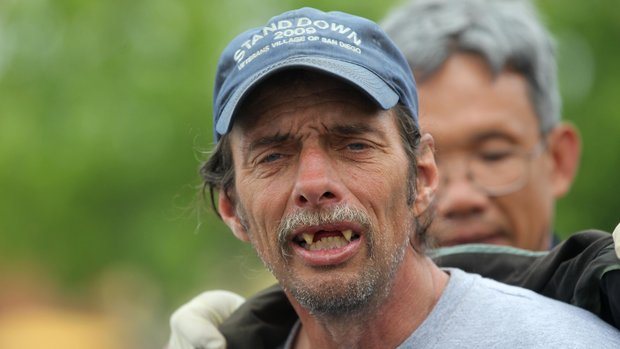
I'm often mistaken for R-Patz
June, 2012: In Denver a woman was arrested after attacking two people in a convenience store, groping and biting one man, then biting the female cashier. Read in full:

A notable difference between these stories and their Zombie counterparts is tone. When reading the Vampire stories it’s obvious that they don’t paint the ‘Vampire’ as being real, but rather as an (often) disturbed person. Yet many of the Zombie articles cite the incidents as being clear proof that a Zombie is real and that a ‘Zombie Apocalypse’ is beginning.       

A fellow Zombie researcher, Louise, had an interesting perspective:

Eating human flesh, particularly the face, in public places is a bit more terrifying than draining blood in public. Plus, those acting like 'zombies' seem unconscious of what they're doing, whereas the 'vampires' are probably very conscious of their actions ... which, to me, make it a little more scary.

Another student of mine, Mike, had this to say:

The main issue is the background of each of the two types of story, vampiric behaviour has always been seen as erotic, personal, and this is why people are attracted to the whole vampire thing due to books and movies. The vampire has lost its ‘darkness’ and is more acceptable now as such the media likes is shock value and that's why the ‘zombie’ stories still loom large in the media. There is nothing sexy about eating someone’s face.

However, fans of the film Zombie Strippers may disagree with the last sentence.  

Ultimately I haven’t determined a single reason as to why assault stories framed as ‘Zombie Attacks’ are more prominent and have a tendency to go wildly viral compared to those described as ‘Vampire Attacks’. But I do like the following idea from one of my top students, Flora, on how we can make the Zombie a more attractive story in the press:

Zombies lack the glamorous image the press likes to promote, but do get the 'shock, horror, yuk' response. Redress the balance by getting Gok to do a zombie make-over, thus making them appear more on-trend and ask Alistair Campbell to do some negative spin about the more gruesome vampire activity, showing them in their worst possible light in a Sunday newspaper expose. Suddenly zombies will be the ones to get the positive headlines and vampires will be so last year they won't get a mention, except in a short disparaging paragraph on page 10.

I'll leave you with this brain tickler from the enigmatic Philosoraptor...


If any of you out there want to know anything about the real science behind zombies, do send your questions to info@zombiescience.co.uk or post them in our Book of Faces (www.facebook.com/zombiescience).

The truth may well be out there,

Doctor Austin

Doctor Austin ZITS BSz MSz DPep, is a Theoretical Zombiologist and Head of the Zombie Institute for Theoretical Studies at the University of Glasgow, Scotland UK.  

Wednesday, 8 February 2012

A Tale of Two Zombies

Hello Zombiology Students,

We recently received two interesting questions from you Zombiology fans and decided to share them in today’s ZomBlog.

The first is from Vicki who emailed asking ‘would it be possible for zombies to be made from a natural mutation of a dual-infection? My idea is that the fer-de-lance snake and a vampire bat causing rabies, both in Panama, could both infect someone, possibly mutate and cause a zombie apocalypse.’

The Bothrops atrox aka fer-de-lance, is a venomous snake, ‘regarded as the most dangerous snake in the Panamanian jungles, chiefly because it is the commonest of the vipers’ (Elton 1999). The snake bite releases venom which contains a substance called a haemotoxin.  In the human body this kills red blood cells, stops blood clots forming and can cause tissue damage.    
Fig 47# Fer-de-lance (with snake)
Vampire bats can refer to three species of bat whose diet consists of blood. Contrary to popular belief they do not suck blood through their teeth, but rather create a wound and lap the blood up. As with all bats they have the possibility of transmitting Rabies, however in reality only a small percentage of the population carry it.
Fig 420# The Vampire Bat (aha ha, gosh I pee'd a little there)
Now we know some basics let’s turn to our resident viral expert, Dr. Katie White for more details, ‘the damage caused by fer-de-lance snake bite isn’t caused by an infection.  Infections are caused by the presence or growth of a biological agent (e.g. bacteria, virus) within the host body.  As an infectious agent grows and multiplies within the host body, the host can then pass on the infection to other people/animals.  The snake venom is not an infectious agent, so the host won’t start producing more of the toxin and won’t have enough inside them to pass it on to anyone else. The snake bite won’t pass on any genes to the host, so there is no genetic material to mutate or combine with that of the Rabies virus.  

As it affects the brain, the Rabies virus does cause some zombie like symptoms and yes it could possibly mutate to cause a more zombie like disease.  However, the Rabies virus is only really transferred between animals and people through bites, as infected hosts produce the Rabies virus in their saliva.  A zombie would have to produce a very large amount of saliva to infect a town’s water supply at a high enough level to actually cause disease.  The Rabies virus normally enters the body through the wound caused by the bite and then it travels along the nervous system to the brain.  If it was drunk in water instead, the virus would probably be destroyed in the stomach and would have no way of actually reaching the nervous system and brain.’

We would advise that any zombies found drooling in your local dam be guided away, and of course never share a drink with a zombie.
No matter how tempting it may be...
Our ZITS colleague Dr. Kevin O’Dell, a senior lecturer in Genetics at the University of Glasgow, kindly explained more about virus mutation, ‘any virus can and does mutate. Usually this leads to a mutant virus that doesn't function at all so doesn't infect and doesn't replicate. Very occasionally a mutation makes a virus more virulent (more infective). The snake venom would only make this more likely if it actively damaged virus DNA, but as Katie says, it doesn't.

If the snake bite occurs first and causes tissue damage then you might be able to argue that a subsequent bite by a zombie bat is more likely to happen as (a) the previously damaged host may not be able to run away as fast so is an easier target and/or (b) a zombie bat may be able to actively detect a compromised host (although I’m not 100% that they have that ability).’
Dr. Kevin O'Dell, he puts the 'S' in 'Necrosis'
Of course you’d have to be having a really bad day to be both bitten by a fer-de-lance snake and a vampire bat in short succession. Or for the optimists out there, a really lucky day, as apparently you are more likely to be struck by lightning than bitten by a fer-de-lance.

So to conclude Vicki, it would seem your theory of dual-infection, whilst creative, is thankfully a long way from causing the zombie apocalypse.

Our next question came from Lydia who asked, ‘could you please answer a zombie conundrum me and some zombie enthusiast friends are having over the Walking Dead TV series. In Season One we see the policeman dude and his new pals in the city covering themselves with blood and guts so that the walkers wouldn't sniff them out. And yet, one of my eagle eyed friends noticed they didn't do that when hiding under the cars from the zombie swarm in Season Two - the zombies never got so much as a whiff of them. And yet the redneck dude covered up the other dude who cut his arm in dead bodies so that the walkers wouldn't smell his blood. So what's that all about? Is this a TV continuity error? And could zombies really smell us living folk? Do they smell us if we are cut; like sharks can 'smell' blood? What's going on?’

 I feel I should start by pointing out that the Walking Dead zombie disease is very different from the condition we investigate in our research. Certain aspects, like being ‘undead’ are not possible at present, and having continual decomposition of skin and organs, would be a lot different than they portray. Regular visitors will know that I love the Walking Dead in its many formats but at the end of the day it is fictional, and so shouldn’t be criticised for its scientific inaccuracies.
My ex-wife used to say this all the time
However your smell question is still a good one, and I will endeavour to give you an answer all the same.

Those who have attended my lectures or read my book will know I believe a new type of prion disease, similar to Mad Cow Disease (vCJD), may be responsible for delivering Zombieism in the future. This type of disease occurs when our natural prion protein (PrP) is forced to change shape by a Rogue form, possibly by ingesting the Rogue through an infected food source, as occurred with cow meat and vCJD (note; this is not the only way to get a Prion disease). Scientists are still unclear as to what function the normal PrP has in our bodies. Many studies to determine an answer have involved mice who had this PrP gene removed or ‘knocked out’. Recent work has shown that mice without the gene perform badly in smell tests, failing to find hidden cookies, amongst other things. Therefore it is likely a Prion diseased zombie would have a poor sense of smell.

If we took the Walking Dead zombies as being real (ignoring the obvious inaccuracies) I would say that they would also have a poor sense of smell and restricted sight. If their bodies are decomposing their eyes would too, getting worse over time. The same would apply to their sense of smell. This means that in Season One using camouflage should work, depending on how long the zombies around them have been decomposing. Any recently turned zombie would have better senses compared with a longer term sufferer. In Season Two, what might be happening is an example of the disease giving rise to low zombie intelligence. Some of them may smell blood or humans, but are not smart enough to think to look beneath a car to find one.  
     
With regard to sharks, they smell around 10,000 times better than humans. A zombie, due to being gradually reduced in operating capacity by the disease, is definitely going to have a worse sense of smell than you or I, or a shark.
But if it's a zombie shark... oh dear
Double oh dear if it's a zombie land shark (although I don't know if I believe Google Images on this one...)
Finally, on the question of TV continuity, it is worth noting that Frank Darabont was the showrunner during Season One, and was replaced by Glen Mazzara for Season Two. You can read various reasons for this online, and I daren’t wade into the debate.
   
Ultimately I think we should all take something from Ron Moore’s First Law when creating the show Battlestar Galactica. When describing questions people asked about the real science of its content he advised taking the mantra, ‘it’s just a show, I should really just relax’. 

We do hope you are both satisfied with your answers. If you want to know anything further, or someone else has a question, do get in touch on info@zombiescience.co.uk.

Very best wishes,

Doctor Austin
Doctor Austin ZITS BSz MSz DPep, is a Theoretical Zombiologist and Head of the Zombie Institute for Theoretical Studies at the University of Glasgow, Scotland UK.  

For even more Zombie Science pick up the official Zombie Science book on Amazon now. 

Bibliography 
Elton, N. (1999, September 27). The Venomous Snakes of Panama from http://www.czbrats.com/Facts/snakes.htm