Showing posts with label hypothalamus. Show all posts

Wednesday, 4 September 2013

Vegetarian Zombies

Greetings Zombie Seekers, and a warm welcome to another edition of the ZomBlog.

Today I’ll be answering a pair of questions from our fine Zombiology student body.

The first is from Jim who asks, “If someone is a vegetarian in their pre-zombie state would they refrain from meat? And along the same vein could a zombie be able to recognise nuts and berries as food and survive on non-meat products?”
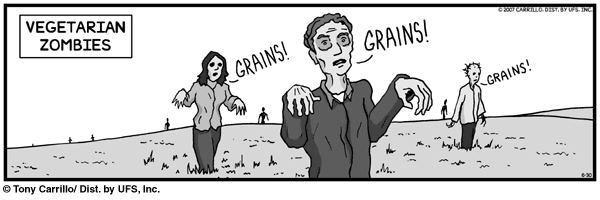

A famous slogan of vegetarianism is “nothing with a face”, and if fiction has taught us anything, it’s that Zombie’s love nothing more than sucking and tucking into a human’s face.

Vegetarianism comes in many forms, some eat eggs, but no other dairy products, and vegans exclude all animal products including clothing such as leather. There are various reasons people abide by these diets, it might be part of their religious practice or for moral reasons but ultimately it is an active choice.

Our current research indicates that a Zombie’s diet stems from the disease affecting an area of the brain known as the hypothalamus. 


The hypothalamus helps regulate appetite by letting us know when we are hungry, or reversely, full. Dysfunction in this region can make us feel like we are never full, causing us to continually eat. This is called hyperphagia. We believe that a Zombie would be hyperphagic and therefore be compelled to eat continuously.

Areas of the brain also play a role in moral sensitivity. In the 19th century a man named Phineas Gage was involved in an accident. An iron bar was blasted through his head, damaging the frontal lobe of his brain and severely changing his personality. Prior to his accident Phineas was a calm mild mannered man, afterward he became an angry womaniser. By studying Gage scientists learned much about the brain, and that the damaged areas were partly responsible for moral sensitivity.
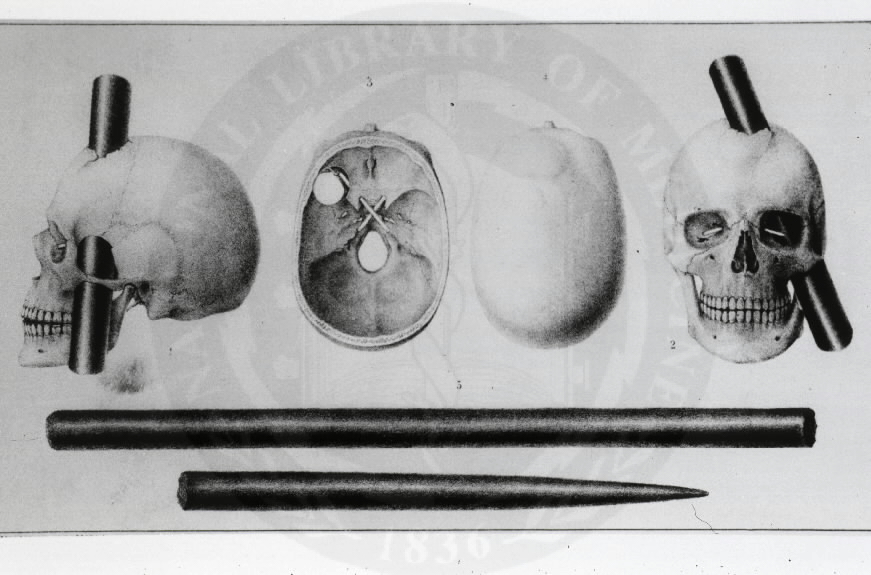
Phineas had great difficulty finding suitable hats after the accident
We must also consider that the Zombie disease is likely to affect a person’s memories, and personality.

If we combine all of these factors it is unlikely that a vegetarian who subsequently becomes a Zombie could remember their previous diet choices, nor care about maintaining them - on top of this the burning compulsion to eat would lead them to devour anything that is available, including meat.

To answer the second part of Jim’s question, could Zombies survive on non-meat products, our current theories indicate that they could and would. A real Zombie, unlike a movie version, does not have a purely cannibalistic diet, and has similar nutritional requirements to a regular human. Read more about our theories in this handy online guide: http://www.zombiescience.co.uk/#!vstc0=zombieism-guide       

In conclusion, a pre-Zombie vegetarian would not carry on this dietary choice once infected, and would be happy to eat anything from meat to veg.
Our second question today comes in from Nico who wants to know, “Do you think its possible for zombies to become useful members of society? For example get jobs etc.”

Of course in some professions no one would notice a difference
The answer to this depends on whether we could develop a treatment for Zombieism that would remove the disease, and whether we could then repair the damage it leaves behind.

If we could do both then Zombies would essentially be human again and able to return to their previous lives.

If we could do neither it would be more difficult, as we’d need to ensure we kept the disease contained and therefore keep infected people away from the uninfected.

If we could remove the disease, but not repair the damage, a Zombie could be left with significant brain injuries leading to difficulties ranging from movement problems to aggression issues. However the human brain is capable of rewiring itself in a process known as neuroplasticity. The aforementioned Phineas Gage overcame many of his initial personality problems over time. So the longer a disease free Zombie lived, the greater the chance it’s brain has of resolving any problems.

Advert for 'In the Flesh'


The television series ‘In the Flesh’ (http://en.wikipedia.org/wiki/In_the_Flesh_(TV_series)) examined this scenario with fantastic creativity, and if you haven’t seen it, I’d recommend you check it out.

So in answer to Nico’s question, I’d optimistically say that yes Zombie’s could become useful members of society. It might take some time for treatments and cures to be developed but we’d never simply give up on helping our fellow humans. Eventually we’d find a way.

A big thank you to Jim and Nico for today’s questions. As always I can answer your questions right here on the ZomBlog. Why not leave yours as a comment below? Or visit our Book of Faces (www.facebook.com/zombiescience) and ask your question there.

No matter how gruesome or tricky, or trickily gruesome, I’ll endeavour to answer them.

Have a Zom-tastic day students,

Doctor Austin

Doctor Austin ZITS BSz MSz DPep, is a Theoretical Zombiologist and Head of the Zombie Institute for Theoretical Studies at the University of Glasgow, Scotland UK.


Wednesday, 31 July 2013

Zombies - Fast Vs. Slow

Good day Zombiology Students and thanks for stopping by the ZomBlog.

The release of the Zombie epic ‘World War Z’ has reignited the debate on whether the undead would move with the shambling strength of a Glaswegian on a Friday night, or strafe the apocalyptic landscape like a decomposing Usain Bolt.

It's still preferable to a budget airline
In today’s ZomBlog I’m not going to explore the issue from the ‘what makes a good film’ perspective, but rather examine what science can contribute to the debate.

Let’s begin by exploring how a disease, like Zombieism, could create the staggering, slow moving monster we encounter in so many undead incarnations.

There are two main areas of the human brain that control movement and coordination. These are the cerebellum and basal ganglia.

The cerebellum essentially tunes and refines our movements. Imagine you are learning to balance on a board placed on a ball. You'll likely tip forward or backward, and have to lean to adjust your body to correct your balance. As you perform and repeat this action your cerebellum is learning, and with enough practice you will be able to get your balance quickly.

This elephant's cerebellum has mad skillz
If this area is affected by a disorder you will have a wider stance as you attempt to balance. When you try to walk you could easily fall and when trying to perform an action, such as touching your nose with your finger, you will often miss.
The basal ganglia are responsible for selecting a particular movement, or a series of movements. When you decide to give someone a 'high five' the basal ganglia prevent you from wiggling your leg at the same time you raise your hand.
If the basal ganglia are damaged you may become slow to begin making movement. For example if I throw a ball to you, it will have bounced off your face before you even begin raising your hand and once the movement has started you will be slow in carrying it out.

You know when you've be basal ganglia-ed
Therefore we can conclude that if the Zombieism disease is damaging or impairing the aforementioned areas of the the brain it will produce in humans an unsteady and slow Zombie-like walk.  

How then could a disease evoke the opposite effect, giving us unrelenting, fast moving Zombies?

When we face a dangerous situation, inside our brain, the hypothalamus activates, sending a chemical signal to the adrenal glands which are next to your kidneys. These glands produce adrenalin, which is to the human body what spinach is to Popeye. Fuelled by adrenalin our blood flows more easily to our muscles, bringing more oxygen with it, ultimately letting them work at heightened levels. This gives us the ability to perform actions, like running fast, slightly better than we normally would. Rather than gaining a new ability, it simply expands on what we already have. But these fits of speed are short lived as within a few minutes the body begins to return to a more normal state.

But what if we continued in this state, would that give us the unrelenting abilities of the fast Zombie? Not for long, as we’d enter a state of exhaustion, damaging our immune systems and increasing our chance of having a heart attack. Simply put, the body would run out of steam.

So in reality would a disease that causes Zombieism be more likely to give us a fast or slow Zombie? The answer, for now, has to be - slow.

My personal thoughts on the debate summed up by a meme
Disease itself means, ‘a disordered or incorrectly functioning organ, part, structure, or system of the body’. A disease makes us worse than we are normally, it doesn’t improve us. I for one am particularly bad at running so it is unlikely that contracting a massively debilitating disease like Zombieism would suddenly give me Olympic level speed. Although if Usain Bolt contracted Zombieism I would be a little bit worried.

First I break a world record - then I eat your face
Of course, we’re dealing with Zombies from the perspective of science. In the fictional worlds of Zombie films, TV shows, games and books it may well be something ‘supernatural’  that gives them these amazing abilities. Couple that with the wonderful ways diseases are changing in our world and perhaps one day science will give us those terrifying fast moving ghouls.

If you have a question about the undead please get in touch with me in the comments section below, and don’t forget to visit our Book of Faces (www.facebook.com/zombiescience). I’m ready, waiting, and willing to answer your questions right here on the ZomBlog.

Take care out there,

Doctor Austin

Doctor Austin ZITS BSz MSz DPep, is a Theoretical Zombiologist and Head of the Zombie Institute for Theoretical Studies at the University of Glasgow, Scotland UK.