Showing posts with label amygdala. Show all posts

Monday, 30 September 2013

Angry Zombies

Fit like there students, help yourself to a cup of tea and let’s get into today’s ZomBlog.

I’m preparing our new public lecture, Zombie Science: Brain of the Dead, for it’s debut at the London Horror Festival. In this lecture I’ll be delving into the Zombie brain. Today I thought I’d share some insights into a part of the brain called the amygdala, and what its role is in Zombieism.
The amygdala lies deep within the brain and is about the size of an almond. It plays a key role in the display and control of aggression.

During a study involving monkeys, their amygdalae were stimulated electrically. This led to an increase in aggression. The fact that monkeys react angrily to having their brains electrocuted isn't exactly a revelation, but us scientists have to pass the time somehow.
The size of the amygdala is known to correlate with how aggressive a species is. If a male is castrated, the amygdala can shrink by up to 30 percent. This may offer one method of calming down male Zombies, but, as opposed to the head, usually offers a smaller target.
I'm personally uncomfortable just looking at this tool, never mind attempting to use it on a Zombie
A reason that Zombieism may want to manipulate this area, and cause increased aggression, is to help it spread.
Recent research suggests that parasites often take up residence in the amygdala. The parasite, toxoplasma causes the disease, Toxoplasmosis. Its preferred host is a cat however if it infects a mouse or rat, it changes their behaviour to make them attracted to cat odours. This will increase their chance of being eaten by a cat thus placing the parasite in the host it desires.
Unless of course the mouse has a basic understanding of explosives
In a similar way Zombieism could twist the amygdalae to do its bidding by altering Zombie behaviour, making Zombies more likely to bite, and therefore improving the odds the disease will be transferred.

Zombies biting is a bit of a ‘three for the price of one’ bonus. It’s how they breed, feed, and make us humans take heed.

Find out more about the undead brain by joining me on the 28th & 29th of October 2013 for the brand new lecture Zombie Science: Brain of the Dead at the London Horror Festival, find out more here, and book your tickets by calling 020 7482 4857. The lecture is part of a 3 year project supported by a Society Award from the Wellcome Trust.

Don’t forget, if you have a question you’d like me to answer here in the ZomBlog why not leave it as a comment below? Or visit our Book of Faces and ask your question there.

When it comes to the science of Zombies we’ve got it covered, or at the very least, we can make it sound like we do.

Keep up the good work my students,

Doctor Austin

Doctor Austin ZITS BSz MSz DPep, is a Theoretical Zombiologist and Head of the Zombie Institute for Theoretical Studies at the University of Glasgow, Scotland UK.

Wednesday, 14 August 2013

Team Zombie

Good day Zombiology Student and thanks for stopping by the ZomBlog.

Today I’m answering a question that came in via the Book of Faces from Jim;

“Hey Doc. I was wondering if Zombies would have organisation skills? I'm not talking about becoming wedding planners or the like but think more along the lines of "The leader" from I Am Legend. Would Zombies be able to lead other zombies with instructions and would those zombies be able to follow them?”
The leader from 'I Am Legend' - more appealing that most political leaders
To begin answering this fascinating question, let’s learn a little something about instinct.

Whilst being a complicated term, instinct essentially refers to the in-built responses seen in animal species. These responses are predictable in a variety of situations for example, many animals will attack anything that threatens their offspring, a cornered animal will either fight, run, or play dead, and most animals demonstrate built in food finding behaviours.

But when it comes to humans, instinct becomes more complicated especially because our brains are capable of overriding instinct, or over expressing it.

Take survival for example. There are many who would argue that the survival instinct is inbuilt into humans. Yet that doesn’t seem to be the case for newborns, young children, and even teenagers - who continually put their survival at risk. You need only look at the newborn who tries to swallow coins or the teenager who drives recklessly to see that in action.

Survival of the Drunkest 

Human instincts are strongly linked to an area of the brain known as the amygdala. This almond shaped structure is one of the oldest parts of the brain from an evolutionary perspective. The amygdala plays a key part in what has been called the "general-purpose defense response control network" and gives rise to whether we will attack or retreat when faced with a specific situation, better known as the “fight or flight” response.

Our research into Zombieism has indicated that the condition could be caused by damage to the human brain including the amygdala. So it is likely that a Zombie would be inclined to act instinctually, certainly more than a uninfected human.

However, this same damage would mean that an individual Zombie lacks the ability to act as a leader and Zombies themselves would be unresponsive to following instruction.

Organizing Zombies would be akin to herding cats. Or directing an episode of Geordie Shore
But this doesn’t mean that Zombies could not appear to have organisational skills, or even act in a collective manner.

A study published in the Proceedings of the National Academy of Sciences found that humans seemingly have a hard-wired ability to notice living things. The study's subjects watched images of various outdoor scenes, two at a time. The second image was slightly different from the first. The differences covered a variety of things, from living animals and humans to inanimate objects such as cars. The results showed that humans can identify changes much faster and more accurately if they're living things. Nearly 90 percent of the living changes were spotted compared with 66 percent for inanimate objects. In other words, we're naturally wired to look out for living things. So it is feasible that a Zombie would be better able to spot and therefore target living things like humans. This could explain why they would be drawn to attacking humans and in a sense would appear to be specifically targeting them.   

We can also consider the area of sociology known as collective behaviour. Collective behaviour is when people engage in interactions in response to unstructured, ambiguous or unstable situations. All of which cover Zombies rather well.

Zombieism is highly likely to affect the aforementioned amygdala, leading to heightened aggression. Therefore a horde of Zombies would be defined in this area of sociology as a mob, because they are an emotionally aroused crowd intent on violence or destructive action.  

Rather aptly the coming together of such a mob is described under “Contagion Theory”, whereby people get swept up in the behaviors of others and act like herds of cattle. Yet a large number of Zombies coming together may only appear to be an example of “herd mentality” rather than actually being one. Take the situation shown in the recent Zombie film “World War Z”. Brad Pitt visits Jerusalem where large walls are keeping the undead out. The loud singing of the assembled crowd attracts the Zombies, who pile against the walls, eventually climbing over one and another until they get in.

Zombie piley-on in action
Observing this, one might think that it is a clever tactic on the Zombies’ part. Using teamwork to reach their prey. In actual fact every Zombie is acting on their individual desire to reach the sound. The action of forming of Zombie Tower, akin to an army of ants, is not a purposeful choice but merely a by-product of the mass of Zombies trying to reach the sound.

Now Zombie Ants, that'd be scary. Or a good Pixar film.
So the answer to Jim’s question, would Zombies have organisation skills, is ultimately no, but they might appear to when observed. The second part of his question “Would Zombies be able to lead other zombies with instructions and would those zombies be able to follow them?” is also presently a no. Their brains would have been too badly damaged to leave leadership skills intact and if by chance one could act as a leader the others would not be able to understand or follow their instructions.

Many thanks to Jim for an excellent question, and if you have a question about the undead please get in touch with me in the comments section below, and don’t forget to visit our Book of Faces (www.facebook.com/zombiescience). I’m ready, waiting, and willing to answer your questions right here on the ZomBlog.

Keep your eyes to the sky, and your ears to the ground, because you never know when Zombies are around.

Doctor Austin

Doctor Austin ZITS BSz MSz DPep, is a Theoretical Zombiologist and Head of the Zombie Institute for Theoretical Studies at the University of Glasgow, Scotland UK.


Wednesday, 4 April 2012

Getting a Zombie grip, and maybe a rip

Bottom of Form
Good day Zombiology Students,

The recent exciting series of the Walking Dead has inspired my students to ask a lot of new zombie questions.
Andrew, an excellent student of mine, asked me this, ‘Are zombies able to tear into someone’s guts with their bare hands? We all know they like to use their teeth but can say Granny Z (that is a zombie with no teeth) uses its hands to tear us into swallow-able pieces? We have already seen zombies have no self-preservation instinct so assuming no atrophy or other degradation of the muscle mass should we not be conscious of the fact that zombies will bring a greater strength to bear as they will not care about injuring themselves? Something any human is capable of (imagine pre-zombie granny Z lifting a car off her grandchild) under particular circumstances’.

I hope the answer is no, but I have my doubts.
Let’s start with the first part, can a human being tear apart another human being bare handed? Well yes, yes they can. As recently as October 2011 a man in Italy tore out his own eyeballs during a Church sermon, and in 2006 a man in the USA lifted a 3,000 pound car to free an injured cyclist. With practice most of us could tear a phone book in half, even if I myself have never managed it.

Success! I can't wait to call my friends, what are there numbers? Oh.
But a person suffering from our proposed Zombieism Prion Disease would be very unsteady on their feet, and have poor control over their limbs. Also, because Zombieism would be a new form of prion disease, it may incorporate the symptoms and characteristics of other current prion diseases. For example Chronic Wasting Disease (CWD), causes amongst other things, extreme weight loss. Although it affects animals at present CWD could develop into part of the new Zombieism Prion Disease. So there is a good chance Zombieism would reduce a person’s strength considerably.

With regard to self-preservation amongst zombies, we certainly see that symptom in the movies, with zombies happily walking through rotor blades on the off chance of getting a snack. In our studies we have concluded that real life zombies would feel pain. The condition congenital insensitivity to pain (CIP), which prevents sufferers feeling the signal of pain, is something one is born with. It cannot be caught like a cold. This condition is the closest comparable one we’ve found to that fictional zombie symptom. CIP is very rare, with only around 100 cases in the USA, so we can bet a real zombie is very unlikely to have that symptom.

No stinkin' helicopter rotor is getting between me and my brunch.
However we know that Zombieism causes a lot of damage to the brain. One area of the brain, the amygdala, is responsible for our instincts. Shaped like an almond, and buried deep with the temporal lobes, it produces much of not only our instincts, but our base emotions as well. If Zombieism caused damage to this area, it may produce a zombie that was overcome with instinct, so much so it may show disregard for pain, even if it was feeling it.

Finally let’s go back to those events, like Andrew’s ‘Granny lifting a car idea’, where people show moments of almost super human strength. In a dangerous situation the human body goes through some interesting changes.

I'll either lift that car, or shoot it off. 
In the brain, the hypothalamus activates, sending a chemical signal adrenal glands. These glands produce adrenalin, which is to the human body, what spinach is to Popeye. When fuelled by adrenalin our muscles are able to contract more. This suddenly gives us the ability to perform actions, like lifting a car, actions we normally couldn’t have managed. Some believe that most of time we only use a small proportion of our strength. When under threat we simply gain the ability to expand on what we already have. But these fits of strength are short lived. Within a few minutes of happening the body begins to return to a more normal state.

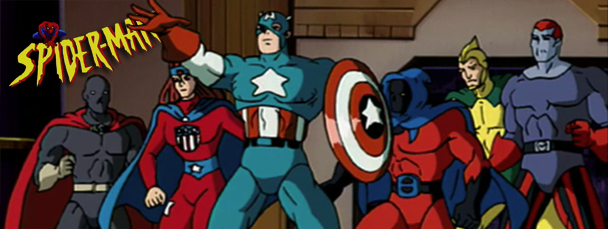
It’s a lot like those friends of Captain America, the Six American Warriors, who were given a less refined version of the super solider serum. It gave them Cap’s powers but only for a short time. Inevitably these newly found super powers would give out during a pivotal moment in the plot. On the bright side they do always return during final battles.

The Six American Warriors, well, em, I can name one...
To conclude; zombies do have the potential to tear a human apart. Like humans, when faced with a dangerous situation they may also receive an adrenalin rush, giving them a short burst of enhanced strength. However the Zombieism disease would be badly affecting their ability to move both legs & arms, and may be causing wasting of the body. So they may lack comparable strength to a healthy human.

Ultimately zombies are like fingerprints, each one is different. And just like fingerprints they inevitably end up all over your glass door. No zombie would have the exact same presentation of the disease as another, so some may be more akin to human, and others more akin to demons.

I just washed these you inconsiderate fiends! 
Thank you Andrew for a great question, and if any of you out there want to know anything about the real science behind zombies, do get in touch on info@zombiescience.co.uk.

Best wishes,

Doctor Austin
Doctor Austin ZITS BSz MSz DPep, is a Theoretical Zombiologist and Head of the Zombie Institute for Theoretical Studies at the University of Glasgow, Scotland UK.  

For even more Zombie Science pick up the official Zombie Science book on Amazon now